
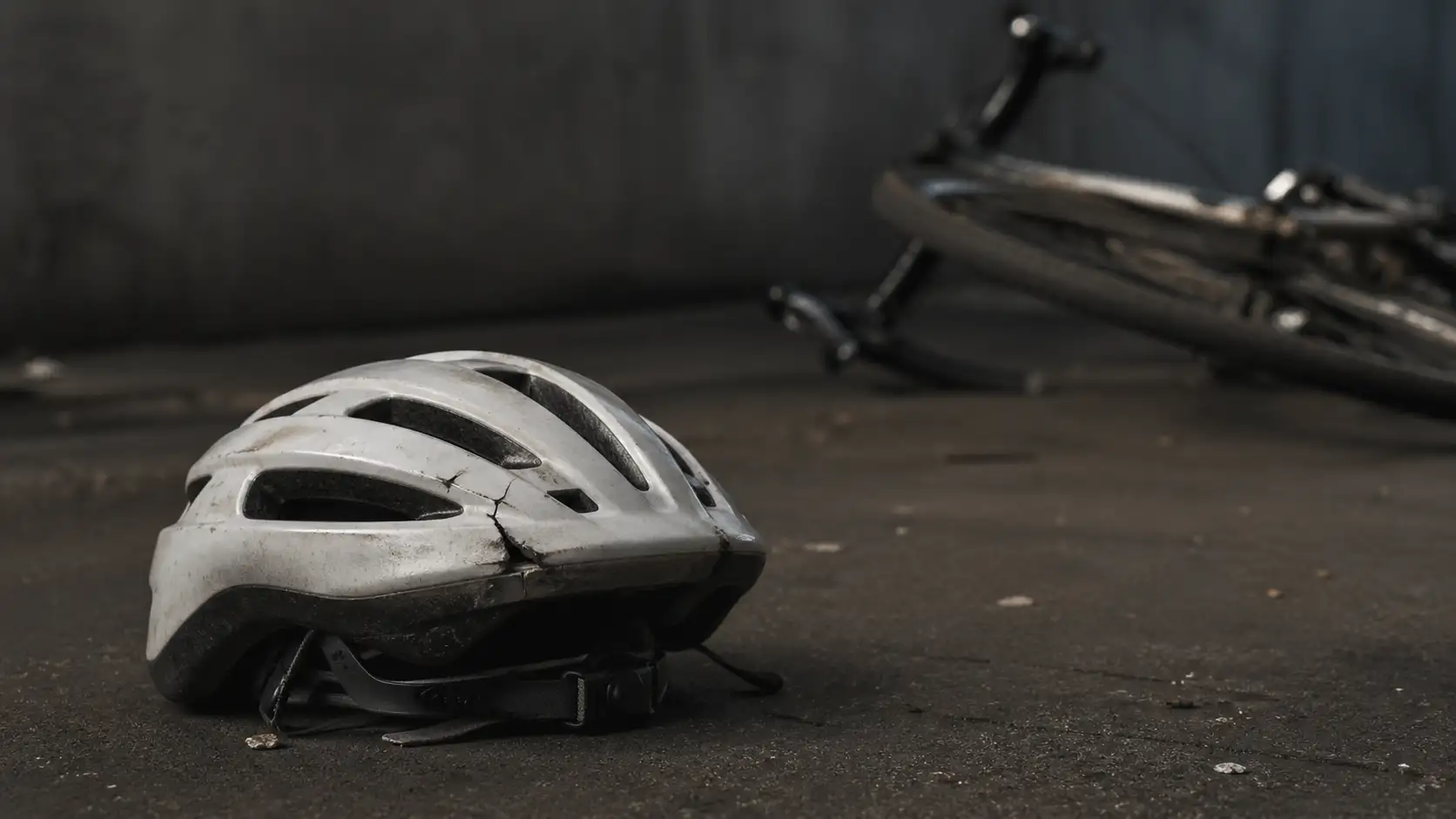
I wrote this piece for Living Safer Magazine. If you ride, read it. :contentReference[oaicite:0]{index=0}
Bicycle helmets have been a standard part of cycling for decades. Laws requiring children to wear them exist in every state, and for good reason.
Statistics show that helmets reduce the likelihood of serious head injuries by 60 percent, traumatic brain injury by 53 percent, and fatality by 34 percent.
That is a significant reduction for something as simple as wearing what is essentially a hard hat.
How Helmets Actually Protect You
Linear Impact Protection
Helmets provide primary protection against blunt force trauma through a foam interior and hard outer shell. This protects against direct impact forces when your head strikes something solid.
Whether it is the ground, a car, or a tree, the helmet acts as a barrier between your skull and the outside world.
Even without a skull fracture, impacts can cause serious injuries such as concussions or subdural hematomas. These are often referred to as closed head injuries.
Rotational Forces and Brain Injury
Not all injuries come from direct impact. Some of the most serious occur when the head rotates or decelerates suddenly.
These are known as axonal shear injuries. They happen when the brain moves within the skull, causing damage without any visible fracture.
These injuries can be severe and often have long-term consequences.
MIPS Technology Explained
MIPS, or Multi-directional Impact Protection System, is designed to reduce rotational forces during impact.
It works by allowing the head to move slightly within the helmet. This reduces the amount of energy transferred directly to the brain.
This added movement becomes critical in situations where the helmet momentarily catches or sticks during impact.
Studies show that MIPS can reduce the risk of closed head injury by at least 10 percent.
A standard helmet still protects against blunt force. But without protection against rotational forces, it offers little defense against these types of brain injuries.
WaveCel and Other Technologies
WaveCel is another technology that claims to reduce both linear and rotational forces. It does this by distributing impact energy through a flexible cellular structure inside the helmet.
There are also several other systems on the market, including SPIN, Fox Fluid, Turbine Leatt, Kali Protectives, Koroyd by Smith, SHRED, and KinetiCore.
These are less common, but worth considering when researching your options.
Choosing the Right Helmet
The most important factor is fit.
A helmet that is too small exposes parts of your skull. A helmet that is too large can shift during impact and reduce its effectiveness.
The correct fit should feel snug and secure when tightened, without movement.
Where to Do Your Research
Virginia Tech provides one of the most respected helmet rating systems available. In 2024, they tested 241 helmets across multiple categories.
Another valuable resource is the Bicycle Helmet Safety Institute, which offers detailed data and analysis on helmet performance.
The Bottom Line
Not all helmets are created equal.
If you want real protection, you need a helmet that accounts for both direct impact and rotational forces.
Take the time to research, choose carefully, and make sure it fits properly.
It could quite literally save your life.
Originally published in Living Safer Magazine, Volume 16 Edition 3.

What Is Tort Reform, Really?